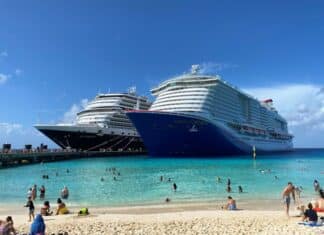
You never forget the first time you see a cruise ship up close. While everyone knows cruise ships are big, it’s not until you are right next to one that you really appreciate just how large they are.
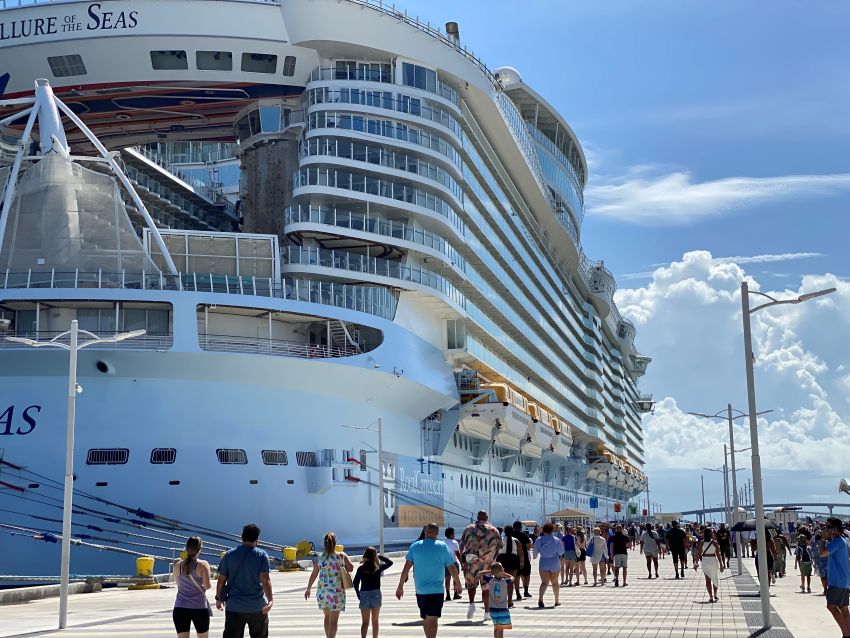
It’s no exaggeration to say it’s like taking a skyscraper, laying it on its side, and then putting thousands of passengers onboard.
And yet, the entire cruise ship — despite being more than 1,000 feet long and having upwards of 20 decks — still floats.
So how exactly does that work? How can a massive structure made of steel and packed with tons of people stay above the water? Here’s how to understand it in the most simple terms possible.
A Simple Physics Idea to Understand How Cruise Ships Float
If you’re confused on how something so large as a cruise ship can float, don’t worry. You’re not alone. In fact, if you type “how do cruise ships…” into Google, the first autocomplete response is “how do cruise ships float”. (Followed by lots of search queries wondering how do cruise ships handle all the sewage that’s created onboard!)
It’s understandable. We all know that steel by itself doesn’t float. Then add on everything from tons of cabins to swimming pools to elevators and more, and it seems like it should be physically impossible for a cruise ship to sit on top of the water.
Well, despite the size even cruise ships are required to follow the rules of physics. That includes the physics required to float.
Put simply, in order to float, an object must be less heavy than the water it displaces. So long as the weight of the water displaced is more than the object itself, it will float.
Now that can be a little confusing to understand, so an example may help.
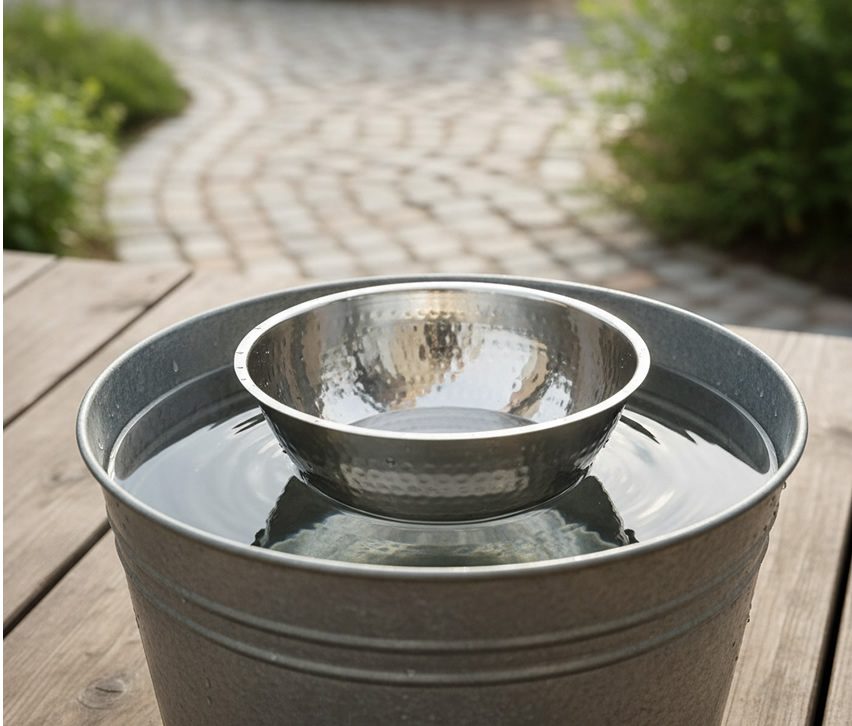
Say you have a steel bolt and a bucket of water. It’s easy to see that if you were to put that steel bolt into the water, it would immediately sink to the bottom.
But now say instead of a steel bolt, you used a steel mixing bowl. It weighs the exact same amount, but the shape spreads the metal over a much larger area. This means it will displace more water. Put the bowl in the bucket of water and you’ll see that it floats easily.
It’s the exact same principle for a cruise ship.
Wouldn’t All the Extra Weight Make a Difference in Floating?
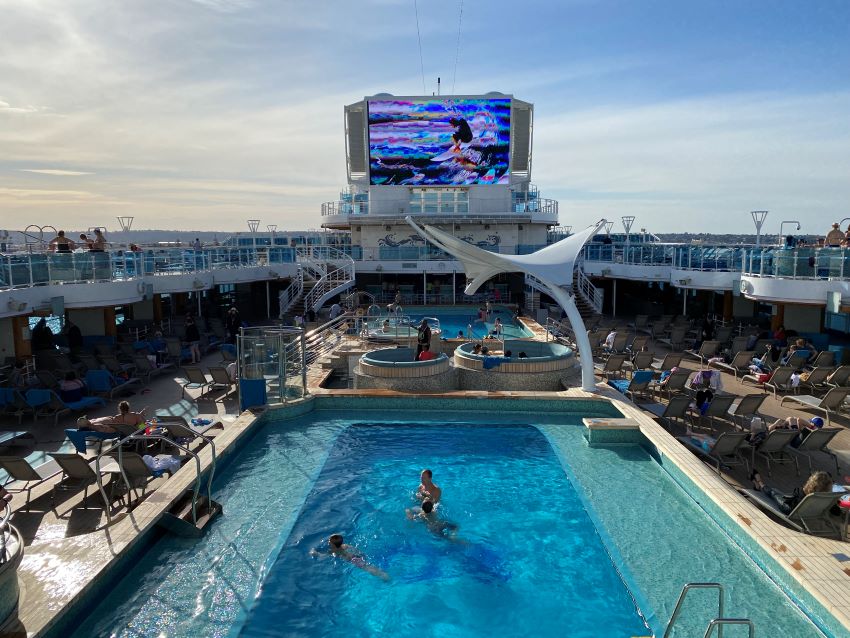
There’s no arguing that cruise ships are heavy. They weigh hundreds of thousands of tons. But when it comes to density, cruise ships are a lot more like a metal mixing bowl than a chunk of sold metal.
The ships spread the weight over more than a thousand feet of length and dozens of feet in width. While you might see the bow and think the underside of the ship is pointed and sharp, it’s actually relatively flat underneath, spreading the massive weight over a large area to help with flotation and stability.
But what about the weight of everything onboard? Unlike most other ships, cruise ships have thousands of people, their luggage, all the supplies for those passengers,
furniture, swimming pools, and more. Wouldn’t this extra weight cause them to sink?
Absolutely not. In fact, you can think of a cruise ship as being much less densely packed than a cargo ship. For instance, a cargo ship carrying oil or grain will have holds that are completely full with no empty space. Meanwhile, a cruise ship — while carrying a lot — is nowhere near as densely packed.
Thus, the extra weight is not really an issue given the size of the ship.
Not Only Can Cruise Ships Easily Float, But They Are Also Stable
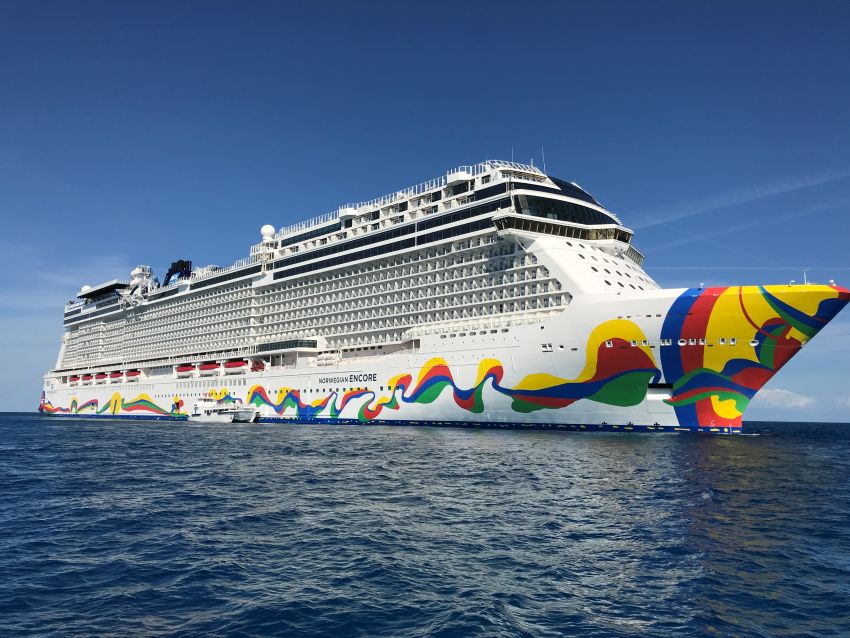
If you’re someone that’s worried about the ability of a cruise ship to float, we’re guessing you might be nervous about going on a cruise in general. It’s a common phobia to be anxious given you are on a ship in the middle of the open ocean and can be hundreds of miles from solid land.
In that case, there are a few things to know. As explained above, cruise ships have no issue floating. Again, picture a steel bowl sitting on the water versus a steel bar. One floats easily while the other will sink.
But beyond that, you may be surprised that cruise ships not only float but are amazingly stable. Due to advanced engineering (as well as a lot of practice in shipbuilding over hundreds of years), today’s ships can feel like they are barely on the water at all.
While not saying you won’t feel the ocean at all, it’s not unusual to feel relatively little. Yes, if the waves pick up you can feel bumps and sways as the ship moves. Most of the time, however, there’s no motion at all.
How stable can the ship feel? Consider that many ships even offer pool tables onboard. That’s a tough game to play if the ship were to rock back and forth constantly.
Bottom line: If you’re worried about the ship’s ability to float and its stability, don’t worry. Cruise ships are some of the most stable structures on the sea.